
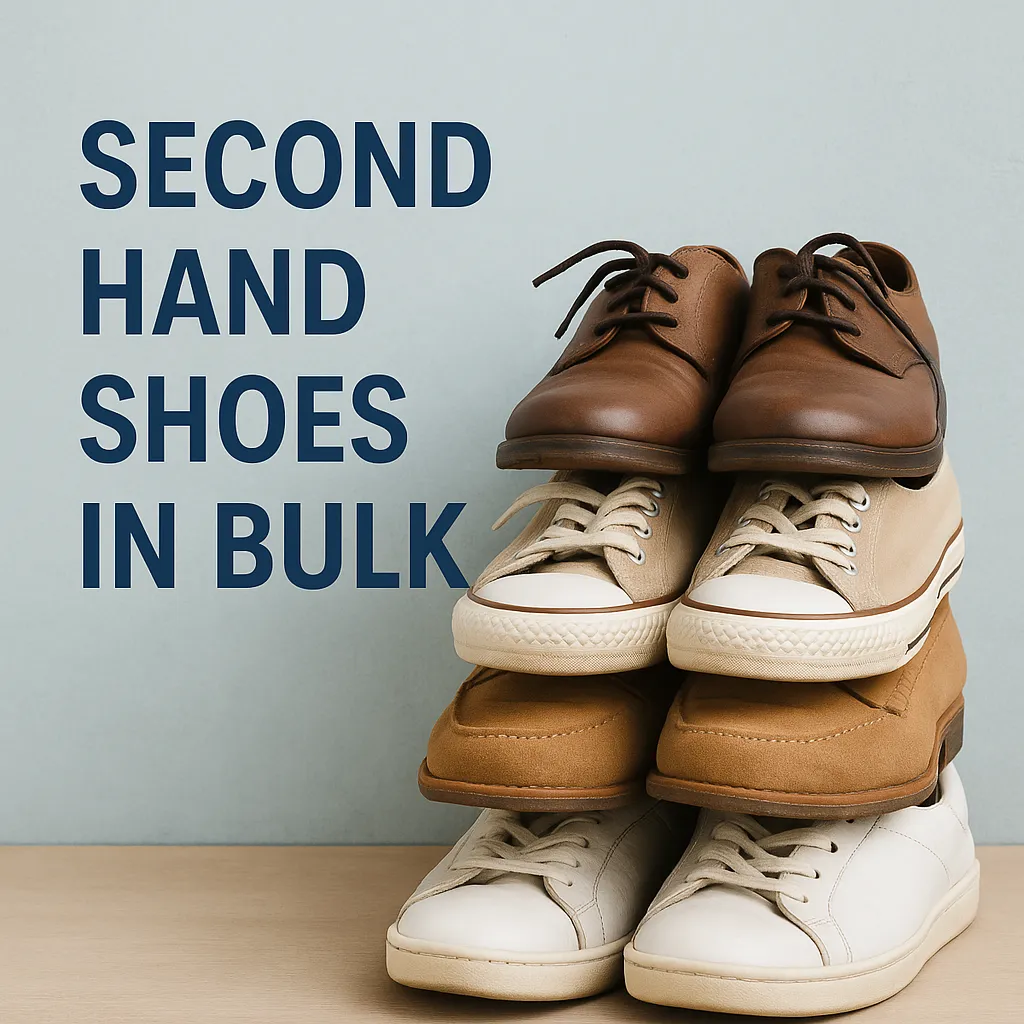
Second hand shoes wholesale: a buyer's checklist for bulk lots
Second hand shoes wholesale means buying footwear in bulk lots, by category or by grade, and sorting and cleaning it yourself before resale. Weight, condition and style vary from lot to lot. Tell us the type, the season and the sizes you sell, and the offer states the grade and what the lot contains.
Shoes are the part of a used-goods order where mistakes cost most. A jacket in the wrong size can still be sold at a discount; a single boot without its partner cannot. This article walks through what to ask and what to check, from the first enquiry to the moment the lot is on your shelf.
How second hand shoes wholesale lots are put together
A lot is defined by a category and a quality grade. The category tells you the kind of footwear, for instance spring shoes, summer slippers or trekking shoes. The grade names the quality tier, and the exact grade and content are confirmed in the offer, so read that document rather than relying on the grade name alone.
Within a lot you should expect a spread of sizes, brands and colours. Photos and descriptions are indicative, and the real mix is only known when the lot is packed. That is normal for used goods, and it is the reason to ask for photos or a short video of your lot before you confirm the order.
Types of footwear worth asking about
Start from your own customers, not from the list of what exists. A shop in a hilly region with walkers passing through will want different stock from a seaside stall in June. Our shoe catalog groups the categories, and a few pages go further into single types.
- Spring shoes for the change of season: trainers, loafers, flat shoes and light boots.
- Summer slippers for markets near beaches and for family shops.
- Trekking shoes for outdoor and sport customers.
Men's shoes deserve their own line in the enquiry. Say whether you want men's, women's or mixed lots, because the size spread differs and so does the resale price you can ask for.
Sizes, pairs and the question of weight
Many buyers search for used shoes in bulk by weight, and footwear is indeed often priced that way in the trade. Whether your offer is by weight or by pair is something to confirm in writing. The difference matters because footwear types differ a lot in weight: a pair of trekking boots is far heavier than a pair of flip-flops, so the same weight buys a different number of pairs.
Ask for an approximate pair count together with the weight of the unit. You will not get an exact number, since weight and content vary by lot, but an estimate lets you work out the cost per pair that you will actually resell. Without it you are comparing two offers that do not measure the same thing.
What to look at in the photos
The photos you receive are indicative, but they still tell you most of what you need. Look at them in the order a customer would look at the shoe.
- Soles and heels: even wear or one side worn down, and whether the tread is still visible.
- Uppers: scuffs, cracks in leather or synthetic material, stains that will not clean off.
- Fastenings: laces, velcro, buckles and zips, which are cheap to replace or impossible, depending on the model.
- Insoles and lining: smell and wear show here first.
Be clear with yourself about the repair budget. Cleaning, new laces and fresh insoles take little time, while resoling does not pay unless the shoe is worth more than the repair. Decide your limit before the lot arrives.
Footwear for resale: three ways to present it
How you sell decides what to buy. A market stall wants pairs tied or clipped together, grouped by size and visible from a metre away. A shop wants cleaner pieces and a size run on the shelf. An online seller wants fewer, better pieces that photograph well, and will care about the grade much more than the stall does.
Whatever the channel, pair the shoes on arrival. Lay out the lot, match left and right, and set aside singles straight away. Missing partners are part of used footwear, and the earlier you sort them, the sooner you know the real number of pairs you can sell.
Buying shoes and clothing in one order
Resellers who stock both can combine categories in one enquiry. A seasonal order often pairs spring shoes with light jackets, or slippers with summer dresses. See what is available in clothing and compare it with the footwear you plan to take, so that the shop window tells one story.
Goods go by road from Marcianise, in the province of Caserta, to customers in Europe. Delivery terms and shipping costs are arranged for each order, and the details are on the shipping page. If you are comparing sources more widely, our notes on where to buy second hand clothes in bulk cover the questions that apply to every supplier.
Planning by season
Footwear has sharper seasons than clothing. Spring shoes need to be on the shelf before the first warm weekend, not after it, and trekking footwear sells in the weeks before the walking season. Work backwards from the date you want a category on sale, and leave time for sorting, cleaning and pricing.
Keep a note of what each lot taught you. After the first order, write down the share of pairs you could sell as they were, the share that needed work and the share you dropped. These three figures, taken from your own shelf, tell you more about the next order than any description can.
Start your enquiry on the contact page with the footwear type, the sizes you resell and the month you want it on sale.
Frequently asked questions
Are used shoes sold by weight or by pair?
It depends on the category and the offer, so confirm it in writing. Weight is common in the trade, but footwear types differ greatly in weight. Ask for an approximate pair count with the weight of each unit so you can work out your cost per pair.
Can I order only men's or only women's shoes?
You can state your preference in the enquiry, and the offer will say what the lot contains. The size spread and the mix of styles differ between men's, women's and mixed lots, so give the sizes you resell most.
Will all shoes come in matched pairs?
Lots are packed as pairs, but used footwear always includes some singles or mismatches, and the real mix is known only when the lot is packed. Pair the shoes on arrival and set singles aside before you price anything.
Can I see the shoes before I order?
Ask for photos or a short video of your lot before you confirm. They are indicative, since condition and style vary by lot, but they show soles, uppers and fastenings clearly enough to judge the general standard.
Is there a minimum order for shoes?
State the footwear type, the sizes you resell and the season, and the offer will give the quantity, the grade and what each lot contains.